

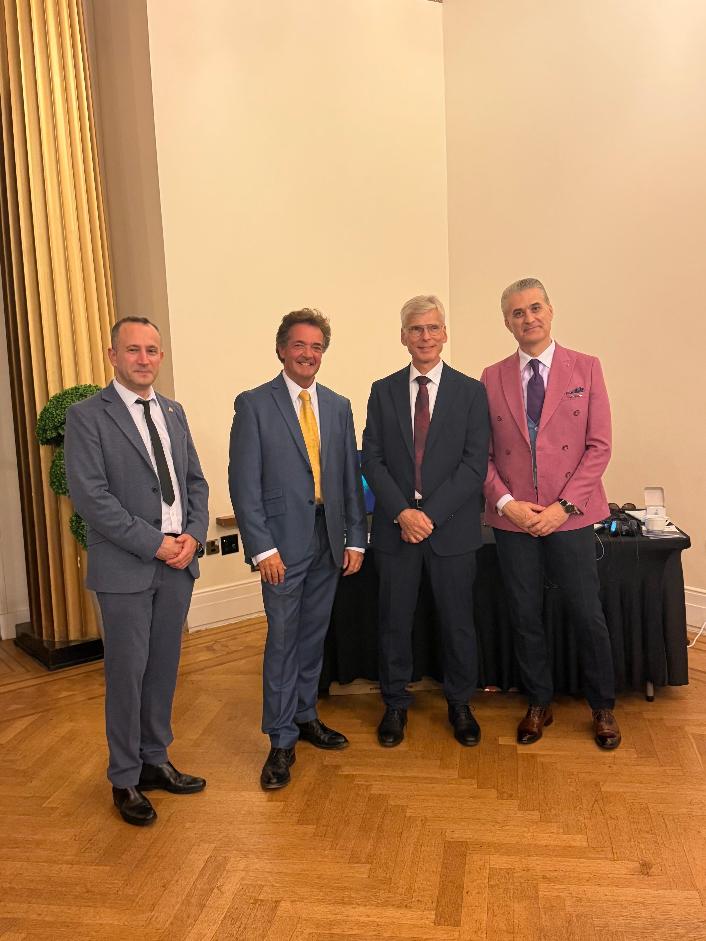
Two pioneering Welsh community initiatives are helping to explore whether biofeedback and neurofeedback could offer practical new ways to support carers, frontline workers, and emergency service personnel.
By the Celtic Neurofeedback Team
Who looks after the nurse at the end of a difficult shift? Who supports the police officer dealing with traumatic incidents, the domestic abuse worker listening to distressing experiences every day, or the parent caring for a child with complex needs?
These are questions that rarely receive the attention they deserve. Yet across Wales, thousands of professionals, carers, and volunteers are supporting others while managing considerable pressures of their own
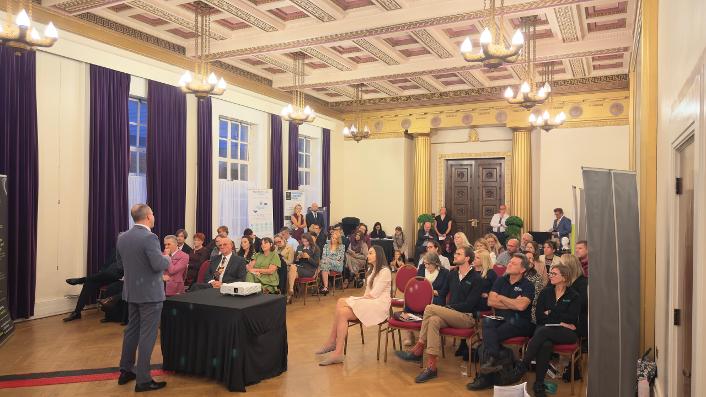
On 13 October 2026, an event at Swansea’s historic Brangwyn Hall brought these concerns into focus, introducing biofeedback and neurofeedback to a wider audience and opening discussions about how these approaches might contribute to staff and community wellbeing.
Organised by Dr Nistor Becia MBE, a Clinical Psychologist from Wales, the event took place in the Mayor’s Events Room within Swansea’s Guildhall complex, one of the city’s best-known civic landmarks.
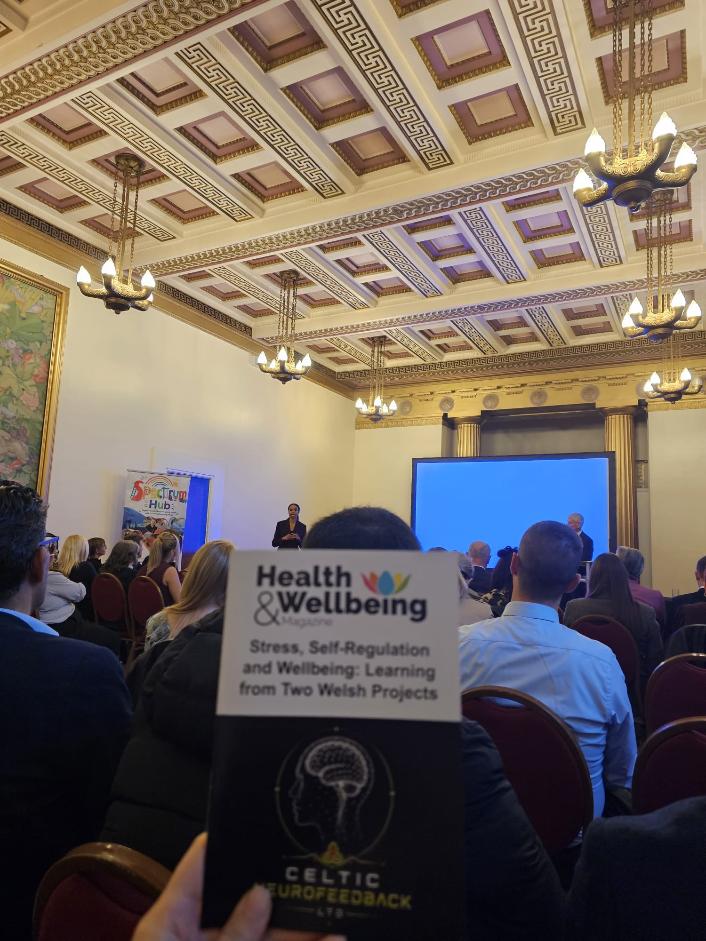
The evening brought together representatives from healthcare, policing, community organisations, and international specialist services under a shared theme:
Making Stress Visible: Who Supports the People Who Are Doing the Supporting?
The message was simple. Supporting people in need remains essential, but the wellbeing of those providing that support can no longer be overlooked.
Two Small Welsh Projects With a Bigger Ambition
The event grew out of two exploratory projects developed in collaboration with Welsh community organisations.
The first involved Thrive Domestic Abuse Services, which worked with Celtic Neurofeedback to explore the feasibility, safety, and acceptability of Infra-Low Frequency (ILF) Neurofeedback alongside physiological monitoring.
Working in domestic abuse services can involve considerable emotional demands. Staff may regularly encounter distressing experiences while supporting individuals and families through difficult circumstances.
Thrive demonstrated considerable commitment by agreeing to explore a new approach within a real service environment. Its willingness to participate offered an opportunity to learn not only about the technology but also about the practical challenges of introducing additional wellbeing support into emotionally demanding workplaces.
The project was a small feasibility and service evaluation initiative, not a clinical trial designed to establish treatment effectiveness.
The second project, Making Stress Visible, was developed with Spectrum Hub in Merthyr Tydfil.
Spectrum Hub is a parent-led community initiative supporting families of children and young people with autism, ADHD, learning disabilities, and other additional needs.
Many parents who approach the organisation are already coping with considerable pressures, while the volunteers supporting them often face similar responsibilities within their own families.
The project introduced Heart Rate Variability (HRV) Biofeedback as a way of helping parents and carers become more aware of their body’s physiological responses.
It raised an important question: while so much attention is rightly given to the needs of children and vulnerable individuals, how often do we stop to ask their carers how they are coping?
Both initiatives remain small, but they have helped start conversations that extend well beyond their original participants.
What if You Could Actually See Your Stress?
Stress is something most people recognise, but it is not always easy to understand what is happening inside the body.
A person might feel overwhelmed, exhausted, or constantly on edge without recognising how their breathing, heart rhythm, and nervous system are responding.
Biofeedback offers a way to make some of these changes visible.
Using sensors and specialist software, HRV Biofeedback measures variations in the time intervals between heartbeats and displays information about physiological activity.
During guided breathing exercises, participants can observe how these patterns change.
Rather than simply being told to relax, they can see aspects of their physiological response on a screen while practising techniques intended to support self-regulation.
For someone experiencing sustained stress, this can provide a practical and engaging way to learn about the relationship between breathing, physiological activity, and emotional regulation.
Research has found promising results for HRV Biofeedback in reducing symptoms of stress and anxiety, although its effectiveness depends on the population, intervention, and quality of the evidence.
Importantly, HRV does not provide a definitive measure of someone’s psychological stress, nor can a single reading diagnose anxiety or burnout.
Neurofeedback works differently.
It uses sensors placed on the scalp to record aspects of brain activity and provide feedback intended to support learning and self-regulation.
One approach, Infra-Low Frequency Neurofeedback, was demonstrated during the Swansea event.
Although neurofeedback has attracted interest for several clinical applications, evidence varies between approaches and conditions. Its effectiveness for occupational stress, particularly using ILF methods, still requires further rigorous investigation.
The two technologies are different, but they share an interesting principle: providing feedback about physiological processes that people cannot ordinarily observe directly.
Why This Matters for Frontline Staff
Healthcare professionals, police officers, ambulance personnel, social care workers and community volunteers are frequently expected to manage demanding situations while remaining calm, attentive and emotionally available to others.
Yet their own wellbeing can become secondary to the needs of the people they support.
Conventional approaches, including psychological therapy, supervision, occupational health services and organisational support, remain essential.
However, there is growing interest in whether practical, skills-based approaches could complement these services.
Biofeedback is particularly interesting because it provides immediate, tangible information and allows people to practise self-regulation techniques rather than relying entirely on discussion.
It may also offer opportunities to develop skills that individuals can continue practising outside clinical settings.
A 2026 systematic review examining biofeedback interventions for healthcare professionals reported encouraging findings for stress and emotional wellbeing, while acknowledging that much of the available research involved small studies and that stronger evidence is needed.
This distinction matters. Biofeedback and neurofeedback should not be presented as quick solutions to burnout or substitutes for adequate staffing, manageable workloads and effective workplace support.
The immediate challenge is to establish whether these interventions are practical, acceptable and potentially useful within real services.
For Dr Becia, this is precisely why small exploratory projects are worth undertaking.
“The pressures facing our services are not going away, and many of the people supporting others are themselves struggling,” he explains.
“We need to remain open to exploring additional approaches that may help, while making sure they are safe, practical and properly evaluated. ”
“Making stress visible gives us an opportunity to help people understand what is happening physiologically, rather than expecting them simply to carry on coping.”
Interest From Welsh Organisations
Since the Swansea event, encouraging interest has emerged from organisations considering how these approaches might be explored further.
Discussions have included colleagues from the Welsh Ambulance Services NHS Trust, South Wales Police and community organisations working with people facing emotionally demanding circumstances.
Potential future projects could examine whether Biofeedback or Neurofeedback can be introduced into existing staff wellbeing arrangements, how participants respond, and whether the approaches are feasible within busy operational environments.
Any such projects would require appropriate organisational agreements, research governance and evaluation.
The growing interest suggests that the original Welsh initiatives may have opened a wider conversation about supporting the workforce behind essential public and community services.
Learning From Romanian Police Experience
International collaboration was another important part of the Swansea event. Among the guests were representatives of the Romanian Ministry of Internal Affairs and its Centre for Psychosociology, led by Comisar-șef de poliție Doru Ștefan Zane, Director of the Centre.
Romanian police colleagues have already made progress in exploring Biofeedback and physiological self-regulation approaches in relation to police personnel wellbeing.
Their experience could provide valuable opportunities for learning and professional exchange with British police services.
Following discussions in Swansea, there is hope that a joint working group involving Romanian and British police representatives could be developed to share knowledge, experience and emerging good practice.
There is also interest in the possibility of an exploratory biofeedback pilot within a UK police force, subject to the necessary agreements and approvals.
The ambition is to learn from police organisations already undertaking related work, identify what may be practical within British policing, and develop future projects informed by shared experience.
Such collaboration could be particularly relevant to officers and staff who regularly encounter traumatic incidents, demanding operational responsibilities and sustained occupational pressure.
Rather than assuming that one approach will work everywhere, the intention is to explore what can realistically be adapted, evaluated, and potentially developed further.
Building Skills and Expertise in Wales
The Swansea event also welcomed Dr Bernhard Wandernoth, Founder and Co-owner of BEE Medic, a Swiss company specialising in neurofeedback technology, alongside Alan Beresford, the company’s UK Manager, and colleagues involved in professional training.
BEE Medic has already supported both Welsh initiatives through the provision of specialist training, equipment, and technical expertise.
This contribution has been important in making the initial projects possible and enabling local professionals to gain practical experience.
Discussions have also taken place about expanding training opportunities for practitioners in Wales.
The longer-term ambition is to develop a wider pool of appropriately trained professionals while increasing public and professional awareness of biofeedback and neurofeedback.
This would allow more organisations to understand what the approaches involve, consider their potential applications, and participate in carefully designed exploratory projects where appropriate.
Guests at Brangwyn Hall were able to observe practical demonstrations of the equipment, ask questions, and gain a clearer understanding of how the technologies work.
For many, seeing the equipment in use helped turn an unfamiliar concept into something more tangible.
A Conversation Wales Needs to Continue
Perhaps the most significant outcome of the Swansea event was not the technology itself, but the willingness of different organisations to come together around a shared concern.
Thrive Domestic Abuse Services demonstrated the value of taking practical steps to explore additional support within an emotionally demanding working environment.
Spectrum Hub highlighted the challenges facing parents and volunteers who give so much of themselves to helping other families.
Interest from ambulance and police services has now opened possibilities for further discussions about staff wellbeing in frontline professions.
The next stage will require careful planning, appropriate research arrangements, professional training, and honest evaluation of what works, what does not, and what can realistically be delivered.
There are no simple answers to the pressures facing Welsh public services and communities.
But there is value in asking new questions and exploring practical possibilities, particularly when those conversations bring together the people who understand the challenges firsthand.
For Dr Becia and the colleagues supporting these initiatives, the ambition is to continue developing this work through collaboration, shared expertise, and further exploratory projects.
“Ultimately, this is not simply about biofeedback or neurofeedback,” he says.
“It is about recognising that the people who spend their lives caring for others have needs of their own.
“If we want them to continue providing the support our communities depend on, we must also think seriously about how we support them.”
The two Welsh projects may have started on a small scale, but the conversations emerging from Swansea suggest that the question behind them deserves a much wider audience.
Who supports the people who are doing the supporting?
And perhaps more importantly, what can we begin doing differently?
By the Celtic Neurofeedback Team
Celtic Neurofeedback is a Wales-based clinical psychology and neurofeedback service founded by Dr Nistor Becia MBE, a Clinical Psychologist. The team is involved in exploratory projects examining biofeedback, neurofeedback, and psychological wellbeing in collaboration with community and professional organisations.